

 English
 русский
 Español
 عربى
عربىThe Preform's Role in Bottle Making
A PET preform is a thick-walled, test-tube-shaped blank, typically between 8 and 60 grams depending on the target bottle size. It's injection molded first, then stored or immediately reheated and fed into a stretch blow molding machine, where it's inflated into the final bottle geometry under high air pressure and stretched axially at the same time.
Because the preform becomes the bottle, its characteristics determine the bottle's characteristics. Wall thickness distribution in the preform directly controls wall thickness distribution in the blown bottle. Gate quality affects base clarity and structural integrity. Neck finish dimensions — the threaded section — dictate whether the finished bottle accepts the cap correctly and whether it seals under carbonation pressure or during hot-fill processes. None of these variables can be corrected downstream. They're set in the Bottle Preform Mold.
Key Design Variables That Affect Preform Quality
Gate design is one of the less-discussed variables in preform mold performance, but it has a direct effect on preform base quality. The gate is the point where resin enters the cavity — in most preform molds, a pinpoint gate at the base of the preform. Gate diameter, land length, and the angle of the gate approach all influence how cleanly the gate vestige appears on the preform base after the hot runner valve closes. A poorly designed or worn gate leaves a visible mark that affects base clarity in the finished bottle, which matters particularly in clear packaging applications.
Core pin geometry controls the internal profile of the preform and, therefore, the material distribution during blow molding. A core pin that isn't precisely centered within the cavity produces a preform with uneven wall thickness on one side — which then blows unevenly. The finished bottle may look acceptable, but its structural uniformity is compromised in ways that show up as performance variation under load or during filling.
Neck finish tooling carries some of the tightest dimensional tolerances in the entire mold. Thread profile, finish diameter, and the sealing surface below the thread all affect cap application performance. In carbonated beverage applications, neck finish deviation can result in cap failure under pressure. In hot-fill applications, it can affect the seal integrity needed to maintain shelf life. These are not hypothetical risks — they're recurring issues that trace back to neck finish tooling that was either poorly specified or has worn beyond its serviceable limits.
Multi-Cavity Mold Balancing and Flow Distribution
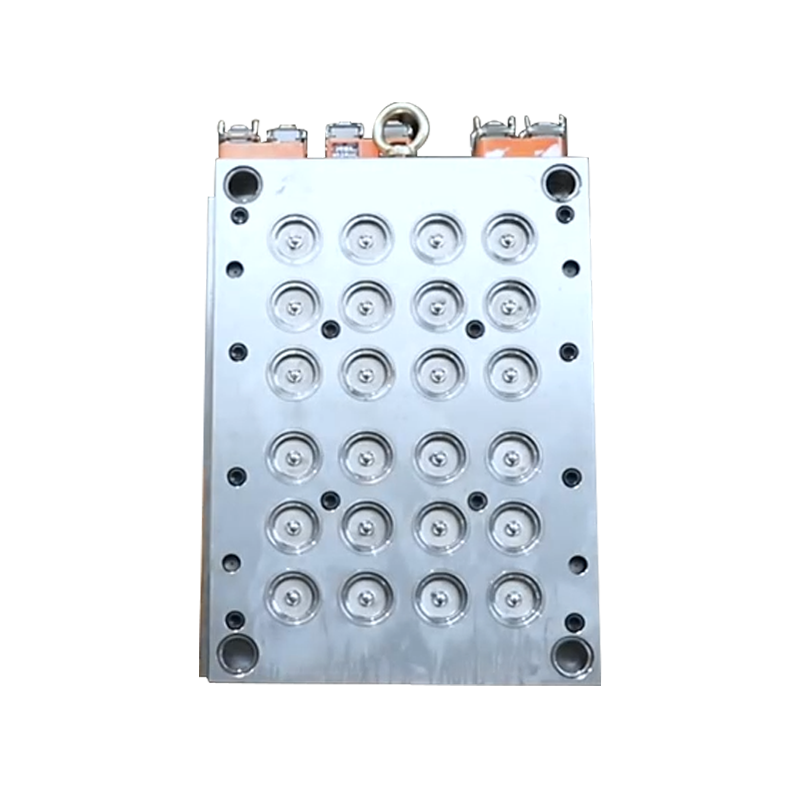
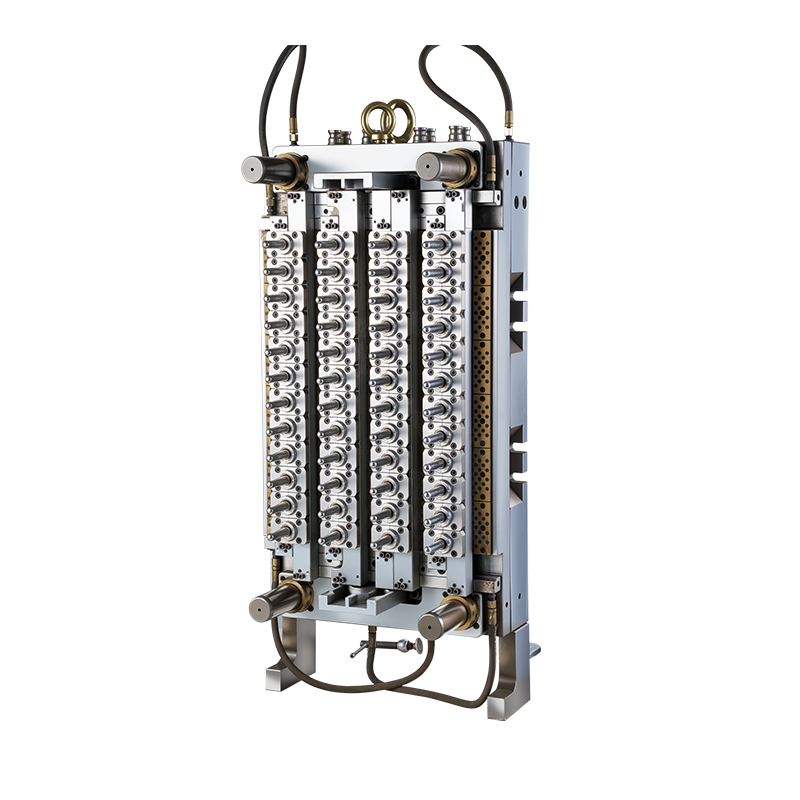
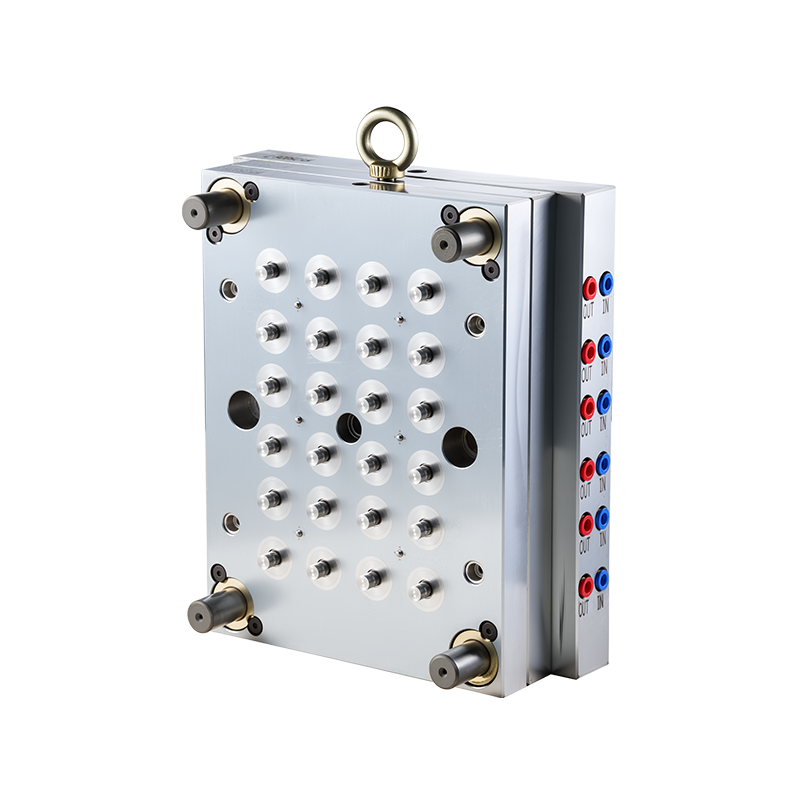
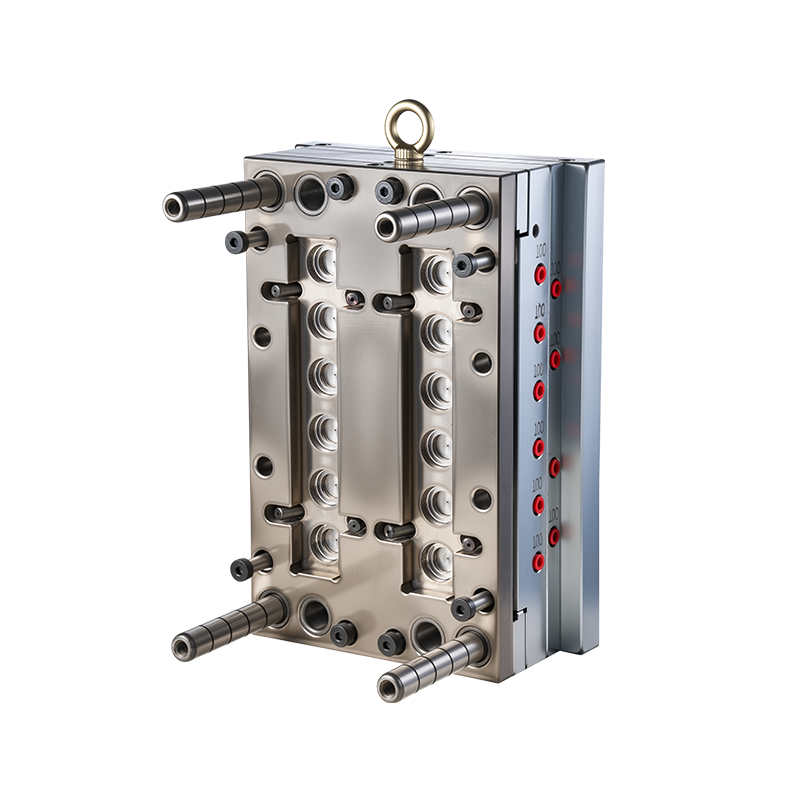
Production bottle preform molds run at high cavity counts — 48, 72, and 96 cavities are common in beverage applications. At these scales, consistent performance across every cavity simultaneously becomes a genuine engineering challenge.
Resin flow through the hot runner has to reach every cavity at the same temperature, the same pressure, and at the same moment in the injection cycle. Any imbalance produces cavities that fill at different rates, which shows up as weight variation between preforms from different positions in the tool. Weight variation means wall thickness variation in the blown bottle. In a carbonated beverage context, that variation directly affects burst pressure consistency across the product.
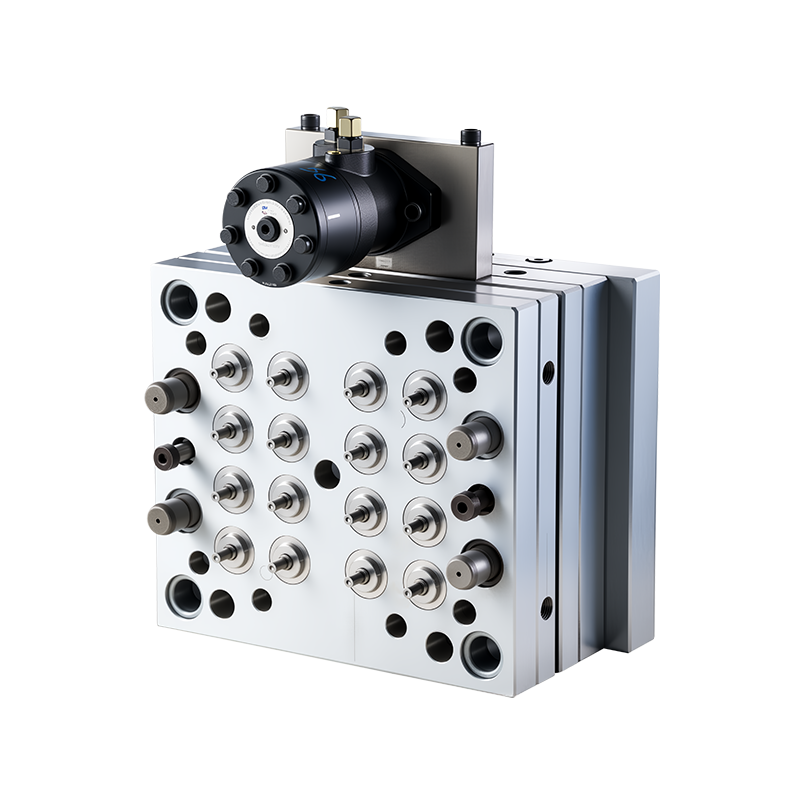
Achieving this balance requires careful hot runner design — runner channel geometry, heater placement, thermocouple positioning, and valve gate timing all contribute. Rheological analysis and mold flow simulation at the design stage identify imbalance before the tool is cut into steel. Correcting a flow imbalance in a completed 96-cavity mold is a considerably more expensive problem than designing it out at the start.